Emaar vs DAMAC vs Sobha vs Binghatti 2026: A Buyer's Comparison of Dubai's Four Most-Traded Developers
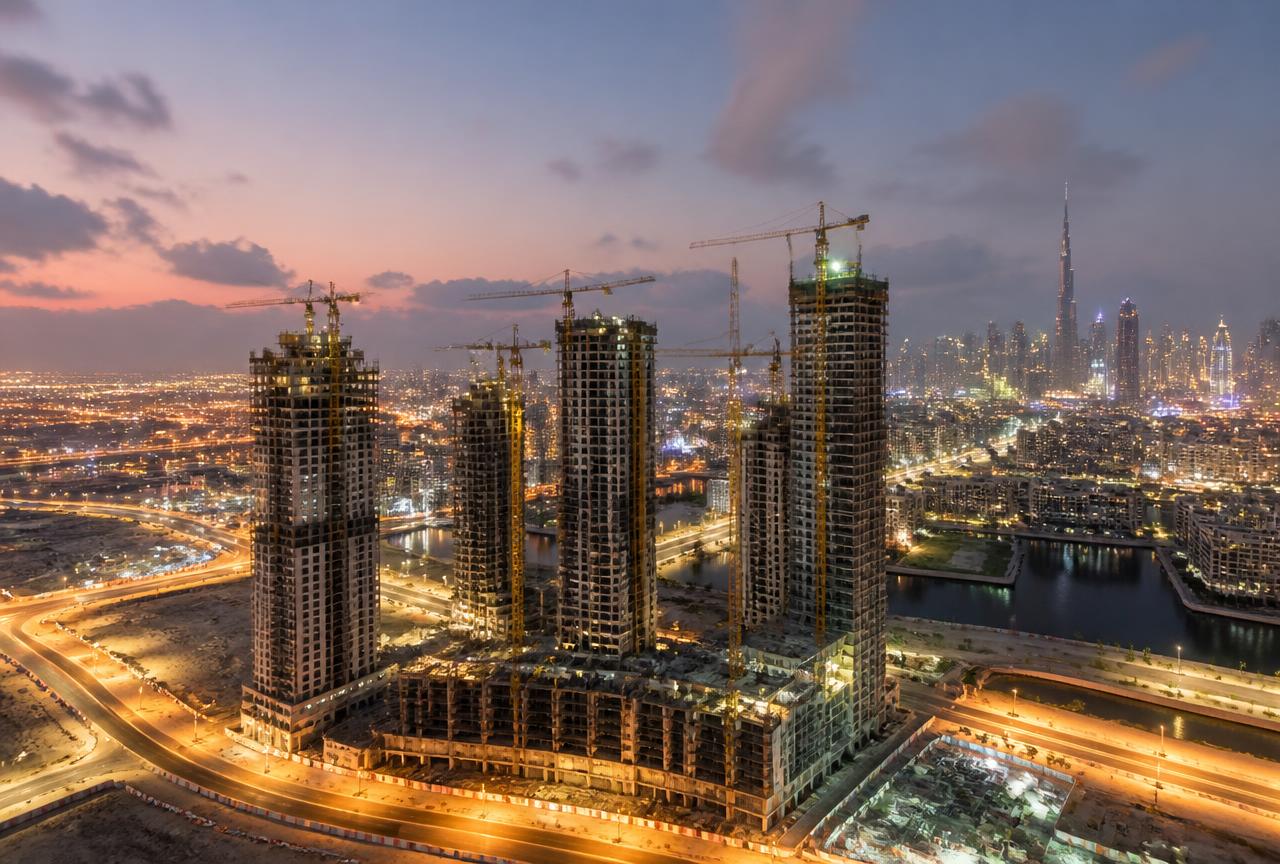
Delivery record, build quality, payment plans, resale liquidity, service charges and post-handover behaviour compared across the four developers foreign buyers encounter most — with the due-diligence checks that matter before you sign anything off-plan.
Why the developer matters more in Dubai than almost anywhere else
In most mature property markets, the builder becomes irrelevant within a decade of completion. A London flat is valued on location, floor area and condition; nobody prices the contractor. Dubai does not work that way, and the reason is structural.
A large share of the market trades off-plan, which means buyers routinely commit capital to a product that does not exist. The developer is therefore not merely the builder but the counterparty, the construction manager, the escrow account holder and, for years afterward, the entity that controls the No Objection Certificate you need to sell, mortgage or transfer. The Dubai Land Department registered record transaction volumes through 2024 and 2025, and a substantial share of those transactions were for units still under construction.
That gives the developer's name real financial content. It determines how likely the project is to complete on schedule, how the building performs after five years of Gulf summers, how quickly a resale buyer materializes, and how much friction stands between you and your exit. This comparison covers the four names foreign buyers encounter most often, plus notes on Nakheel and the branded-residence segment.
The four developers at a glance
Each of these developers is RERA-registered and operates escrow-backed projects. The differences are in positioning, not legitimacy.
| Developer | Positioning | Typical price premium | Payment plans | Resale liquidity | Signature communities |
|---|---|---|---|---|---|
| Emaar | Blue-chip master developer | High (+10% to +25%) | Construction-linked, modest post-handover | Deepest in the market | Downtown, Dubai Hills, Creek Harbour, Dubai Marina |
| DAMAC | Volume and lifestyle branding | Mid, aggressive on launch | Long and post-handover heavy | Good in flagship projects, variable elsewhere | DAMAC Hills, Business Bay, DAMAC Lagoons |
| Sobha | Quality-led, in-house build | High in its own districts | Construction-linked, less flexible | Strong but narrower buyer pool | Sobha Hartland, Hartland II, MBR City |
| Binghatti | Fast-cycle, design-forward, accessible | Low to mid | Short plans, frequent launches | Improving; building-specific | JVC, Business Bay, Al Jaddaf |
DAMAC: flexibility, at a price
DAMAC built its market position on volume, marketing and payment-plan innovation. It was among the first to popularize extended post-handover plans in which the buyer continues paying for two or three years after moving in, and it has partnered aggressively with luxury fashion and automotive brands to differentiate otherwise comparable towers.
For an investor with limited upfront capital and confidence in rental demand, the structure is genuinely useful: the unit can begin generating income while instalments continue, effectively letting the tenant service part of the purchase. That is a legitimate strategy, not a gimmick.
Where DAMAC requires more diligence
Outcomes vary more by project than with Emaar. Flagship communities have performed well; some secondary launches have delivered less durable finishes and slower resale. Because the range is wider, project-level diligence matters more: check the specific building's completion percentage, escrow status and, where the tower is finished, its actual service-charge filing and early maintenance history.
Branded units also narrow the resale pool. A distinctive interior concept that thrilled the launch buyer can limit the audience five years later.
Sobha: build quality as the product
Sobha Realty competes on a single, unusually clear proposition: it controls its own construction chain. Where most developers tender the full scope to contractors and subcontractors, Sobha performs a large share of the engineering, joinery and fit-out in-house. The claim is verifiable in the outcome — surveyors and snagging companies operating across Dubai consistently report shorter defect lists in Sobha handovers.
That has financial consequences beyond comfort. Better joinery, better waterproofing and better mechanical installation reduce the maintenance reserve a landlord needs in years three through eight, which is precisely when cheaply built towers begin consuming cash. Sobha Hartland and its successor phases in Mohammed Bin Rashid City have accordingly attracted a heavier end-user and family mix than pure investor stock.
The trade-offs
Pricing inside Sobha's own districts is firm, and payment plans are less accommodating than DAMAC's. The buyer pool at resale is strong but narrower than Emaar's simply because the brand recognition among international buyers, while rising, is not yet equivalent.
Location is also a consideration: the Hartland districts are well positioned relative to Downtown and Meydan but do not carry the beachfront or Downtown-adjacency premium that supports Emaar's top-tier pricing.
Binghatti: entry price and speed
Binghatti has grown rapidly by doing something the majors mostly do not: delivering distinctive, design-led towers on short build cycles at accessible price points, concentrated in JVC, Business Bay and Al Jaddaf. Its facades are deliberately recognizable, which functions as marketing and as a resale differentiator in districts otherwise full of interchangeable buildings.
For a first-time Dubai investor or a remote worker buying a base rather than a trophy, the proposition is coherent: lower entry, faster handover, and location inside high-yield mid-market communities where gross returns run above seven percent.
What to check specifically
Because the delivery pipeline is fast and the portfolio has expanded quickly, verify each project individually rather than relying on the brand. Confirm the escrow account, the RERA completion percentage and, in JVC in particular, how many competing towers hand over in the same window — that district's rental performance is sensitive to supply timing.
Long-run resale depth is still being established in some buildings. Buyers planning a five-year hold should be comfortable that their exit may depend more on the specific building's rental performance than on brand recognition.
Nakheel, Meraas and the branded segment
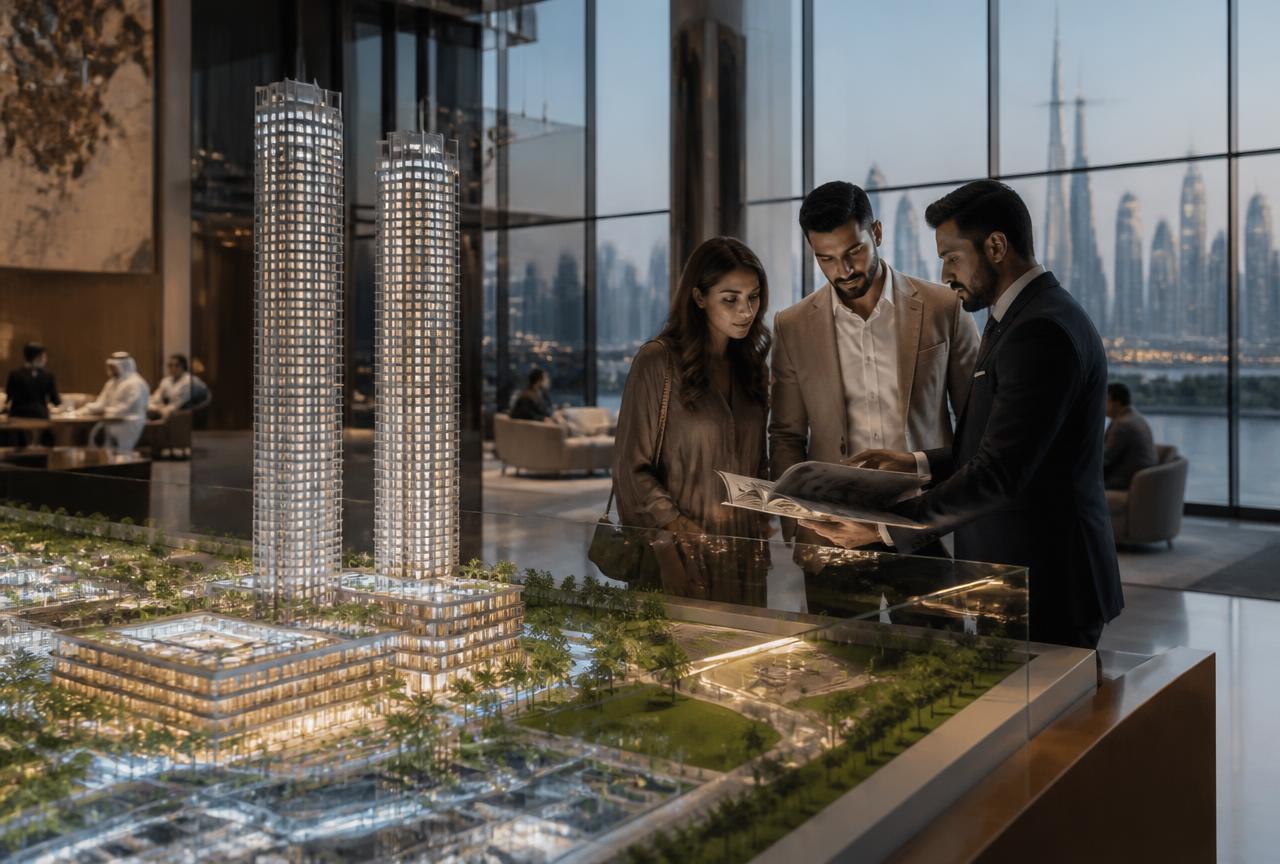
Three other names appear regularly in foreign buyers' shortlists. Nakheel developed Palm Jumeirah and the wider palm and island portfolio, which means its inventory is defined by irreplaceable waterfront rather than by construction methodology. Meraas built the lifestyle districts — City Walk, Bluewaters, La Mer — where retail and residential are deliberately blended.
Branded residences, whether hotel-operated or fashion-badged, form a segment of their own. They rent at a premium, hold nominal value well in prime locations and carry materially higher service charges. The premium is most reliable on the Palm, in Downtown and on the Marina waterfront, and least reliable in secondary districts where the brand is doing all the work.
The due-diligence checklist that applies to all of them
Developer reputation narrows risk. It does not remove the need for project-level verification, and every item below is publicly checkable before you pay a deposit.
- **Confirm RERA registration** for both the developer and the specific project on the Dubai Land Department register.
- **Confirm the escrow account exists** for that project and that your payments route into it, not to a company account.
- **Check the construction completion percentage** filed with RERA against what the sales team is telling you.
- **Read the assignment clause** — the minimum percentage paid and the fee required before you may resell off-plan.
- **Read the delay clause** — what compensation, if any, applies and at what point you may exit.
- **Pull the Mollak service-charge history** for completed comparable towers by the same developer.
- **Verify the broker's RERA card** and that commission terms are in writing.
- **Confirm the title or Oqood registration** route and who pays the DLD fees.
Matching the developer to your strategy
The useful question is not which developer is best but which one matches what you are trying to achieve.
| Your objective | Best fit | Why |
|---|---|---|
| Maximum resale liquidity | Emaar | Widest buyer pool and established masterplans |
| Lowest long-run maintenance | Sobha | In-house construction, tighter defect lists |
| Cash-flow-friendly entry | DAMAC | Extended and post-handover payment structures |
| Lowest entry price, high gross yield | Binghatti | Mid-market districts with 7%+ gross returns |
| Irreplaceable waterfront | Nakheel | Palm and island inventory cannot be replicated |
| Golden Visa qualification | Any at AED 2M+ | Threshold is value-based, not developer-based |
Case study: two AED 1.5 million purchases, five years apart in outcome
Two investors each commit AED 1.5 million in the same year. The first buys a one-bedroom off-plan from a premium master developer in an established community on a construction-linked plan. The second buys a larger two-bedroom off-plan from a fast-cycle developer in a mid-market district on a shorter plan.
- **Investor A** takes handover on schedule, lets at AED 105,000, pays AED 14,000 in service charges, and sells in year five to a resident end-user within six weeks at a firm price.
- **Investor B** takes handover two quarters late into a district absorbing three simultaneous tower completions, lets at AED 118,000 after a nine-week void, pays AED 11,000 in service charges, and achieves a higher percentage yield throughout.
- **Year-five position:** B earned more income across the hold; A exited faster and at a tighter spread to asking price.
- **The lesson:** yield and liquidity are separate objectives, and the developer choice is largely a choice between them.
Conclusion and next steps
Dubai's four most-traded developers are not competing to be the same thing. Emaar sells liquidity and location control. Sobha sells build quality that pays back in maintenance years. DAMAC sells payment flexibility and brand differentiation. Binghatti sells access and speed. Each is a rational choice for a different investor, and the mistake is not picking the wrong one — it is picking any of them without running the project-level checks that apply regardless of the name on the hoarding.
Before you sign a reservation form, verify the escrow account, the completion percentage and the assignment terms. Then compare the payment plan against the alternative of financing a completed unit, using the lender landscape in our Dubai mortgage guide for non-residents and the structural comparison in our off-plan payment plans analysis. If residency is part of your objective, confirm which threshold your purchase reaches in the property residency visa guide.
Verify every developer and project claim directly with the Dubai Land Department, through the Dubai REST platform, and check tax obligations with the Federal Tax Authority.
This article is informational and does not constitute financial, tax or legal advice. Developer positioning and project terms change; confirm current details with licensed professionals before committing funds.
Frequently asked questions
Which is the best developer in Dubai for foreign investors?
There is no single best. Emaar leads on resale liquidity and delivery consistency, Sobha on build quality and in-house construction control, DAMAC on payment-plan flexibility and headline pricing, and Binghatti on entry price and rapid delivery cycles. The right answer depends on whether you optimize for liquidity, quality, cash flow or entry cost.
Is Emaar more expensive than other Dubai developers?
Generally yes, by roughly ten to twenty-five percent per square foot against comparable locations. The premium buys location control in established masterplans, a long delivery record and the deepest resale buyer pool in the market.
Are DAMAC post-handover payment plans a good deal?
They improve cash flow but are usually priced into the headline figure. Compare the total consideration against a cash or shorter-plan purchase of a comparable unit before treating the plan as free financing — extended plans typically carry an embedded premium.
Why is Sobha considered higher quality?
Sobha operates a backward-integrated model, controlling much of its construction, joinery and fit-out in-house rather than subcontracting the full scope. Buyers and surveyors consistently report tighter snagging lists and better finish durability, which shows up in lower early maintenance costs.
Is Binghatti a safe developer to buy from?
Binghatti is RERA-registered with escrow-backed projects and has delivered a growing volume of towers on comparatively short build cycles. Its risk profile is different from the majors: lower entry price and faster delivery, with less established long-run resale depth in some buildings.
How do I check a Dubai developer is legitimate?
Verify the developer and the specific project on the Dubai Land Department register, confirm an escrow account exists for that project, check the RERA project completion percentage, and confirm the broker's RERA registration. All of this is publicly verifiable through DLD channels and the Dubai REST app.
What protects my money in an off-plan purchase?
Law No. 8 of 2007 requires developers to hold buyer payments in a project-specific escrow account released against verified construction milestones. It is the core protection in the Dubai off-plan market and the first thing to confirm before transferring funds.
Can I resell an off-plan unit before handover?
Usually yes, subject to the developer's rules. Most require a minimum percentage paid — commonly thirty to forty percent — plus a No Objection Certificate and an administration fee. Assignment terms vary significantly between developers and should be read before purchase, not after.
Which developer has the lowest service charges?
Charges track the amenity level more than the developer name. Amenity-heavy branded towers cost more to run regardless of who built them. Compare the actual Mollak filing for the specific building rather than assuming a developer-wide figure.
How common are handover delays in Dubai?
Delays of one to three quarters remain common across the market, including with major developers. Escrow protects the funds but not the timeline, so model your income start date conservatively and avoid committing to a mortgage schedule that assumes an on-time handover.
Do branded residences hold value better?
Branded stock generally holds nominal value well and rents at a premium, but it carries higher service charges and a narrower resale pool. The premium is most durable in prime waterfront and Downtown locations and least durable in secondary districts.
Should I buy off-plan or completed in 2026?
Off-plan suits buyers with time, staged capital and tolerance for delivery risk. Completed stock suits buyers who need income now, want to inspect what they are buying and prefer certainty over launch pricing. Many investors run both in a single portfolio.
Related in Invest
 INVEST
How to Invest in Dubai Real Estate From Abroad in 2026: The Complete Remote Buyer's Process
 INVEST
Dubai Commercial Real Estate Investment 2026: Offices, Retail and Warehouses Compared
 INVEST