Dubai Off-Plan Payment Plans 2026: Developer Comparison, Escrow Rules and Risk Checklist
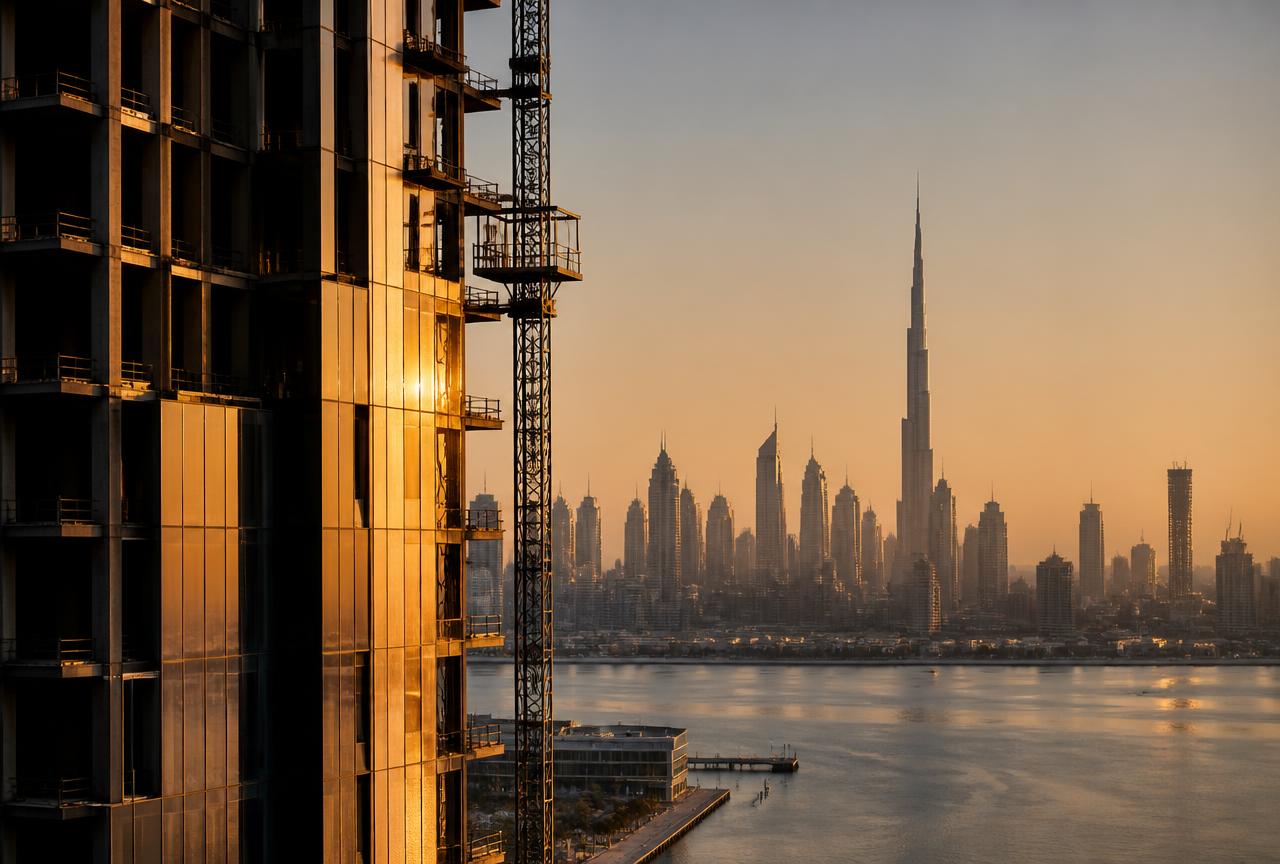
How off-plan payment plans really work in Dubai in 2026: construction-linked versus post-handover structures, what escrow does and does not protect, how Emaar, DAMAC, Sobha, Nakheel and Binghatti terms differ, and the twelve checks that separate a sound launch purchase from an expensive lesson.
Why the payment plan matters more than the brochure
Almost every off-plan conversation in Dubai starts with the same two data points: the price per square foot and the promised handover quarter. Both matter. Neither determines whether the purchase works financially. The payment plan does, because it decides how much capital is locked up, for how long, and at what point the asset starts producing anything at all.
Consider two units in comparable towers at the same headline price. The first asks for 60% during construction and 40% on handover. The second asks for 20% during construction and 80% spread over four years after keys. The second buyer holds substantially more cash throughout the build, starts collecting rent while still paying instalments, and can redeploy the difference elsewhere. On identical resale values, their return on invested capital is not remotely the same.
This guide breaks down how off-plan structures are built in 2026, what the regulatory framework actually guarantees, how the major developers differ in practice, and the checks that reliably separate sound launches from expensive lessons. Readers weighing the format itself should also read our off-plan versus ready property ROI comparison.
The legal architecture behind off-plan sales
Dubai's off-plan market is regulated far more tightly than its reputation abroad suggests, and the structure is worth understanding before evaluating any single project.
The foundation is Law No. 8 of 2007 concerning escrow accounts for real-estate development, which requires developers to deposit buyer payments into a project-specific trust account. Funds are released against verified construction progress rather than at the developer's discretion, and a retention percentage is held back after completion to cover defects and outstanding obligations.
Layered on top of that is mandatory registration. Every off-plan sale must be recorded on the interim register through the Oqood system operated by the Dubai Land Department. An unregistered off-plan sale is not merely risky, it is legally defective. The Real Estate Regulatory Agency supervises project registration, escrow compliance and, where a project fails, the cancellation and liquidation process.
Public verification tools close the loop. The Dubai REST application and the DLD's online services allow anyone to check project registration, developer details and reported completion percentages before committing funds.
What escrow protects, and what it does not
Escrow protects the integrity of construction funding. It substantially reduces the risk that money paid for one tower is diverted to finance land acquisition for another, which was the failure mode that damaged the market in the previous cycle.
Escrow does not guarantee a handover date, a resale price, a rental level, or the specification quality of the finished unit. It does not protect a buyer who overextends across three payment plans simultaneously and cannot meet instalments. Those risks remain entirely with the purchaser.
Interim register versus title deed
During construction the buyer holds a registered interest on the interim register, evidenced by an Oqood certificate. The title deed is issued only after completion, handover and settlement of the balance.
This distinction has practical consequences for financing, for residency applications that require a titled asset, and for resale, which happens by assignment rather than by conventional transfer.
The four payment-plan structures you will actually be offered
Marketing language varies wildly across developers, but nearly every plan in the market reduces to one of four shapes, or a hybrid of two.
- A plan that defers cash is never free. The deferral is priced into the unit, usually between 5% and 12% above an equivalent cash-heavy purchase.
- Milestone-linked instalments give the buyer information. Calendar instalments do not.
- Post-handover plans are only advantageous if the unit actually rents at the level assumed when the plan was signed.
- Any plan requiring a large final payment is a bet on credit availability at a future date the buyer does not control.
| Structure | Typical shape | Best suited to | Main trade-off |
|---|---|---|---|
| Construction-linked | 10% deposit, 50–60% across milestones, 30–40% on handover | Buyers with steady liquidity who want visible progress before paying | Heaviest cash requirement before any income |
| Calendar-based | Fixed instalments every 3–6 months regardless of progress | Buyers who prefer predictable budgeting | Payments continue even if the site slows |
| Post-handover | 20–40% before keys, remainder over 2–5 years after | Investors who want rent to help service the balance | Higher headline price; effectively vendor financing |
| Back-loaded 80/20 or 90/10 | Small percentage during build, large payment at handover | Buyers expecting a mortgage or liquidity event at completion | Refinancing risk if lending conditions tighten |
Running the numbers properly
The most useful discipline in off-plan analysis is to stop comparing prices and start comparing capital deployed over time. Two plans at AED 1,500,000 are not the same investment if one requires AED 900,000 before handover and the other requires AED 300,000.
A workable method takes four steps. First, list every payment with its expected date, including the 4% Dubai Land Department fee and Oqood charges. Second, add the costs that begin at handover: service charges, furnishing if the unit will be let furnished, and management fees. Third, model rental income starting one quarter after handover rather than on handover day, because leasing takes time in a building where dozens of units complete at once. Fourth, compute the return against average capital employed rather than against the sticker price.
That final adjustment is where post-handover plans usually justify their premium, and where back-loaded plans often disappoint, because the large completion payment lands exactly when supply from the same project floods the rental market.
| Metric | Construction-linked 60/40 | Post-handover 30/70 |
|---|---|---|
| Cash out before handover | 60% of price + fees | 30% of price + fees |
| Income start | At handover | At handover |
| Capital tied up during build | High | Low |
| Typical price premium | None | 5%–12% |
| Sensitivity to rate changes | Lower | Higher if refinancing planned |
| Best case | Lower total price if held long term | Higher return on capital employed |
How the major developers differ in practice
Developer selection is the single largest determinant of off-plan outcome, and the differences are behavioral rather than merely reputational. What matters is delivery history, specification consistency, community management after handover, and how flexible the developer is when a buyer needs to restructure.
Emaar, as the master developer behind Downtown Dubai, Dubai Creek Harbour, Dubai Hills Estate and Emaar Beachfront, is generally the benchmark for delivery reliability and resale liquidity, and tends to offer more conservative, construction-weighted plans. Buyers pay a premium for that predictability.
DAMAC is the most consistently aggressive on plan structure, frequently marketing post-handover terms and fee incentives. Nakheel controls master communities including Palm Jumeirah and Jumeirah Village Circle and derives strength from location scarcity. Sobha Realty has built its positioning on in-house construction and finish quality, particularly at Sobha Hartland. Binghatti has scaled rapidly with design-led mid-market towers and short build cycles, which appeals to shorter-horizon investors but concentrates completion supply.
None of this is a recommendation. It is a framework for the question that matters: does this developer's historical behavior match the promises in this specific contract?
| Developer | Typical positioning | Plan style commonly seen | What to verify |
|---|---|---|---|
| Emaar | Premium master communities, strong resale depth | Construction-weighted, modest deferral | Launch pricing versus nearby ready stock |
| DAMAC | Volume, branded residences, incentives | Frequent post-handover structures | Price premium embedded in the deferral |
| Nakheel | Master-planned waterfront and community land | Balanced milestone plans | Community-level supply pipeline |
| Sobha | Finish quality, in-house construction | Milestone-linked | Service-charge levels after handover |
| Binghatti | Fast-cycle design-led mid-market | Shorter plans, quick completion | Concentration of completions in one submarket |
Where off-plan buyers actually lose money
Project failure is the risk buyers fear, and it is the least likely one in a regulated escrow environment with reputable developers. The real losses in this market are quieter.
The most common is paying a launch premium that the completed market never validates. A unit bought at a launch price above nearby resale value in the same community has to wait for genuine market appreciation just to break even, and that wait can consume years of expected return.
The second is liquidity mismatch. Buyers commit to two or three plans on the assumption that one will be assigned before its heavy instalments begin. When assignment demand cools, the instalments arrive anyway, and a forced sale into a soft window converts a paper position into a realized loss.
The third is service-charge shock. Off-plan buyers model rent carefully and service charges casually. In high-amenity towers the annual charge per square foot can absorb a meaningful slice of gross yield, and it is disclosed clearly only after handover under the Mollak system.
The fourth is supply timing. When several towers in one community complete within a few months, rents in that micro-market compress temporarily. Buyers who assumed area-average rents on day one discover the average was set before eight hundred new units arrived.
- Compare the launch price to actual registered transactions in adjacent completed buildings, not to the developer's projected values.
- Model instalments on the assumption that you cannot assign the unit before handover.
- Request the projected service-charge budget in writing and compare it against Mollak figures for similar towers.
- Map every project completing within one kilometre in the same twelve months.
The twelve-point pre-signature checklist
This is the sequence experienced buyers run before any money leaves an account. It takes a few hours and prevents most of the outcomes described above.
- Confirm the project's RERA registration number and that it appears on official DLD channels.
- Verify the escrow account exists and is specific to this project, then pay into it and nowhere else.
- Check reported construction completion percentage on Dubai REST rather than relying on renderings.
- Review the developer's last three delivered projects for delay length and finish quality.
- Read the delay, penalty and cancellation clauses in the sale and purchase agreement in full.
- Confirm who pays the 4% DLD transfer fee and whether it is genuinely waived or capitalized into the price.
- Establish the assignment threshold, no-objection certificate cost and any resale restriction period.
- Obtain the estimated service-charge rate per square foot and the amenity list driving it.
- Confirm the unit's exact size, layout, floor and orientation in the annexes, not in the brochure.
- Stress-test the payment schedule against a twelve-month delay and no interim assignment.
- If financing is intended, secure a lender's written appetite for that specific project before signing.
- Have an independent conveyancer, not the sales agent, review the contract.
How off-plan fits a remote-worker or non-resident strategy
For buyers living outside the UAE, off-plan has a specific structural appeal: it converts a large single transaction into a series of manageable transfers, which is easier to fund from foreign income and easier to align with currency timing.
It also has a specific structural drawback. Handover requires presence or a properly executed power of attorney, snagging requires someone competent on the ground, and leasing requires a registered agent. None of that is difficult, but it must be arranged before the handover notice arrives rather than after.
Buyers who intend to hold and rent should read our guide to managing a Dubai rental from abroad alongside this article, and those weighing residency should review the Golden Visa property route, where the title-deed timing described above becomes directly relevant.
Conclusion and next step
Off-plan in Dubai in 2026 is neither the speculative free-for-all its critics describe nor the guaranteed appreciation its brochures imply. It is a structured, regulated way to acquire property on staged terms, and the outcome is decided by three variables the buyer fully controls: which developer, at what entry price relative to completed comparables, and on what payment schedule.
Choose those three well and the format is genuinely efficient. Choose them on the strength of a rendering and a champagne launch, and the escrow account will have protected the construction while doing nothing at all for the return.
Before signing anything, run the twelve-point checklist above, verify the project independently through the Dubai Land Department and the UAE Government portal, and confirm your own worst-case liquidity. This article is informational and is not investment, legal or tax advice.
Frequently asked questions
What is an off-plan payment plan in Dubai?
It is a schedule agreed with the developer that spreads the purchase price across construction milestones, and sometimes beyond handover. A typical structure asks for a reservation amount, a deposit at contract signing, several instalments tied to construction progress, and a final payment on handover.
Is off-plan property safe in Dubai?
The legal framework is one of the strongest in the region. Law No. 8 of 2007 requires developers to hold buyer funds in a project-specific escrow account regulated by the Dubai Land Department, and every off-plan sale must be registered on the interim register. Safety still depends on developer selection, contract terms and the buyer's own liquidity.
What is a post-handover payment plan?
A structure where part of the price, often 20% to 50%, is paid in instalments after the keys are handed over, typically across two to five years. It reduces cash strain during construction and lets rental income contribute to the remaining balance, usually in exchange for a higher headline price.
What is Oqood registration?
Oqood is the Dubai Land Department system used to register off-plan sales on the interim property register. Registration is mandatory and creates the buyer's recorded interest in the unit before a title deed exists at completion.
How much are the fees on an off-plan purchase?
The Dubai Land Department transfer fee is 4% of the purchase price, plus Oqood administrative charges. Depending on the developer and the deal, the 4% may be paid by the buyer, split, or absorbed by the developer as an incentive. Service charges begin only after handover.
Can I resell an off-plan unit before handover?
Usually yes, through an assignment, but only after a minimum percentage of the price has been paid, which most developers set between 30% and 40%. The developer issues a no-objection certificate and charges an administrative fee, and the transaction is recorded with the Dubai Land Department.
Can foreigners get a mortgage on off-plan property?
Financing off-plan is possible with selected banks and approved projects, though loan-to-value ratios are lower and non-resident access is more restricted. Many buyers use the developer plan during construction and refinance after the title deed is issued.
What happens if the project is delayed?
Delays are common and most contracts allow a grace period, often twelve months, before penalties apply. The Real Estate Regulatory Agency can intervene where a project stalls, and in extreme cases a project can be cancelled with escrow funds distributed under supervision. Buyers should read the delay and cancellation clauses before signing.
Do off-plan purchases qualify for the Golden Visa?
Property-linked residency generally requires a titled asset meeting the value threshold, so eligibility usually crystallizes at handover rather than at launch. Some off-plan cases qualify where the required amount has been paid and the authorities accept the documentation, which should be confirmed directly before relying on it.
Which is better: off-plan or ready property?
Off-plan trades immediate income for staged payments and construction risk. Ready property trades a larger upfront outlay for rent from day one and a verifiable service-charge and occupancy history. The right answer depends on the buyer's liquidity, holding period and tolerance for timeline uncertainty.
What is a construction-linked payment plan?
A plan in which instalments fall due as verified construction milestones are reached, such as foundation completion, structural topping-out or facade completion. It aligns cash outflow with visible progress and is generally more buyer-protective than pure calendar-based schedules.
How do I verify a developer before buying?
Check the RERA project registration number, confirm the escrow account exists for that specific project, review completion percentage on Dubai REST, examine the developer's delivery history on previous projects, and read the sale and purchase agreement with an independent conveyancer rather than the sales team.
Related in Invest
 INVEST
How to Invest in Dubai Real Estate From Abroad in 2026: The Complete Remote Buyer's Process
 INVEST
Emaar vs DAMAC vs Sobha vs Binghatti 2026: A Buyer's Comparison of Dubai's Four Most-Traded Developers
 INVEST