Dubai Property Residency Visas 2026: Every Threshold, Cost and Timeline from AED 750K to the 10-Year Golden Visa

The complete decision map for property-linked UAE residency in 2026 — which investment level unlocks which visa, what off-plan and mortgaged properties qualify for, dependant sponsorship, renewal traps, and the total cost of each route from application to Emirates ID.
Why property became the default residency route
For most of the last two decades, living in the UAE meant being employed by a UAE entity. The employer held the visa, the visa held the Emirates ID, and leaving the job started a countdown. That structure suited a labor-import economy and suited almost nobody with independent income.
The reforms that began in 2019 and accelerated through the 2022 entry and residence law rewrote that logic. Long-term residency became available on the strength of what a person owns, earns or contributes rather than who employs them, and property was placed at the centre of the framework. By 2025 the Dubai Land Department was reporting record foreign participation in the market, with a substantial share of buyers explicitly citing residency as a purchase driver.
For remote workers, entrepreneurs and investors, the practical result is a tiered menu. Different amounts of committed capital unlock different durations of residency, different sponsorship rights and very different renewal burdens. Choosing correctly at the outset saves years of avoidable administration.
The threshold map: what each investment level unlocks
Three property-linked routes matter in 2026. They differ not only in duration but in what qualifies as an eligible asset, which is where most applications fail.
| Route | Property threshold | Duration | Off-plan eligible | Mortgage eligible | Dependants |
|---|---|---|---|---|---|
| Property investor visa | AED 750,000 | 2 years, renewable | Generally no — completed only | Yes, with bank NOC and equity test | Spouse and children |
| Golden Visa (property) | AED 2,000,000 | 10 years, renewable | Yes, approved developers | Yes, subject to conditions | Spouse, children, parents, staff |
| Retirement visa (55+) | AED 1,000,000 property or savings/income route | 5 years, renewable | No | Case-dependent | Spouse and dependants |
The AED 750,000 two-year investor visa in practice
This is the entry point, and for many first-time buyers it is the pragmatic choice. It requires a completed, freehold, residential property registered in the applicant's name with a value of at least AED 750,000 evidenced by a Dubai Land Department valuation certificate — not by the purchase contract.
Where applicants get caught
Three conditions cause most rejections. The property must be completed and handed over, so an off-plan unit under construction does not qualify. The valuation must reach the threshold at the time of application, which matters when a property was bought years ago at a different price level. And where the property is mortgaged, the bank must confirm the loan status and the applicant must have paid the required proportion.
The valuation certificate is issued by the Dubai Land Department for a fee and is the document the immigration authority relies on. Order it early; it is the most common bottleneck.
Renewal reality
Two years passes quickly. Each renewal repeats the valuation certificate, medical fitness test, Emirates ID renewal and fees. Owners who intend to hold long term frequently find that topping up to the AED 2 million Golden Visa threshold costs less over a decade than five two-year renewal cycles for a family.
The AED 2 million Golden Visa: the route most investors should target
The ten-year Golden Visa is the strongest residency instrument available to a private individual in the UAE, and the 2022 reform made it materially easier to reach through property.
The threshold is AED 2 million in property value, which may be aggregated across more than one property. Off-plan purchases from approved developers can qualify where the required value has been paid, and mortgaged properties can qualify with the financing bank's confirmation. This is a substantial change from the earlier cash-only, completed-only position.
What the Golden Visa gives you that shorter visas do not
No minimum stay requirement, so residency survives long absences — decisive for remote professionals who split the year across countries. Sponsorship of parents and domestic staff alongside spouse and children. A ten-year renewal horizon that removes the biennial administrative cycle. And independence from any employer or sponsor, which is the underlying point of the whole framework.
Aggregation and joint ownership
Two apartments at AED 1.1 million each satisfy the threshold for a sole owner. A jointly owned property is assessed on each party's registered share. Where a couple wants both partners to hold independent Golden Visas rather than one sponsoring the other, the ownership split must be structured so that each share reaches AED 2 million — a decision best made before transfer, not after.
Our detailed walkthrough of eligibility, documents and processing sits in the Dubai Golden Visa through property investment guide.
Costs: what the process actually runs to
Government fee schedules change, and typing centres, PROs and legal advisers add their own margins. The table below is a planning range for a 2026 application processed in Dubai, excluding the property purchase itself and its 4% Dubai Land Department transfer fee.
- Dependants add roughly AED 4,000 to AED 8,000 each depending on route and age.
- Medical insurance is mandatory for residents and is not included above.
- Two-year renewals repeat most line items every 24 months; the Golden Visa repeats them once a decade.
| Item | Two-year investor visa (AED) | Golden Visa (AED) |
|---|---|---|
| DLD property valuation certificate | 2,000 – 4,000 | 2,000 – 4,000 |
| Application and entry permit | 1,200 – 2,500 | 3,000 – 5,000 |
| Medical fitness test | 350 – 750 | 350 – 750 |
| Emirates ID (per term) | 370 – 600 | 1,000 – 1,200 |
| Visa stamping / issuance | 1,500 – 3,000 | 3,000 – 5,500 |
| Typing centre and service fees | 1,000 – 2,500 | 1,500 – 3,500 |
| Indicative total per applicant | 6,400 – 13,350 | 10,850 – 19,950 |
Timeline: from title deed to Emirates ID
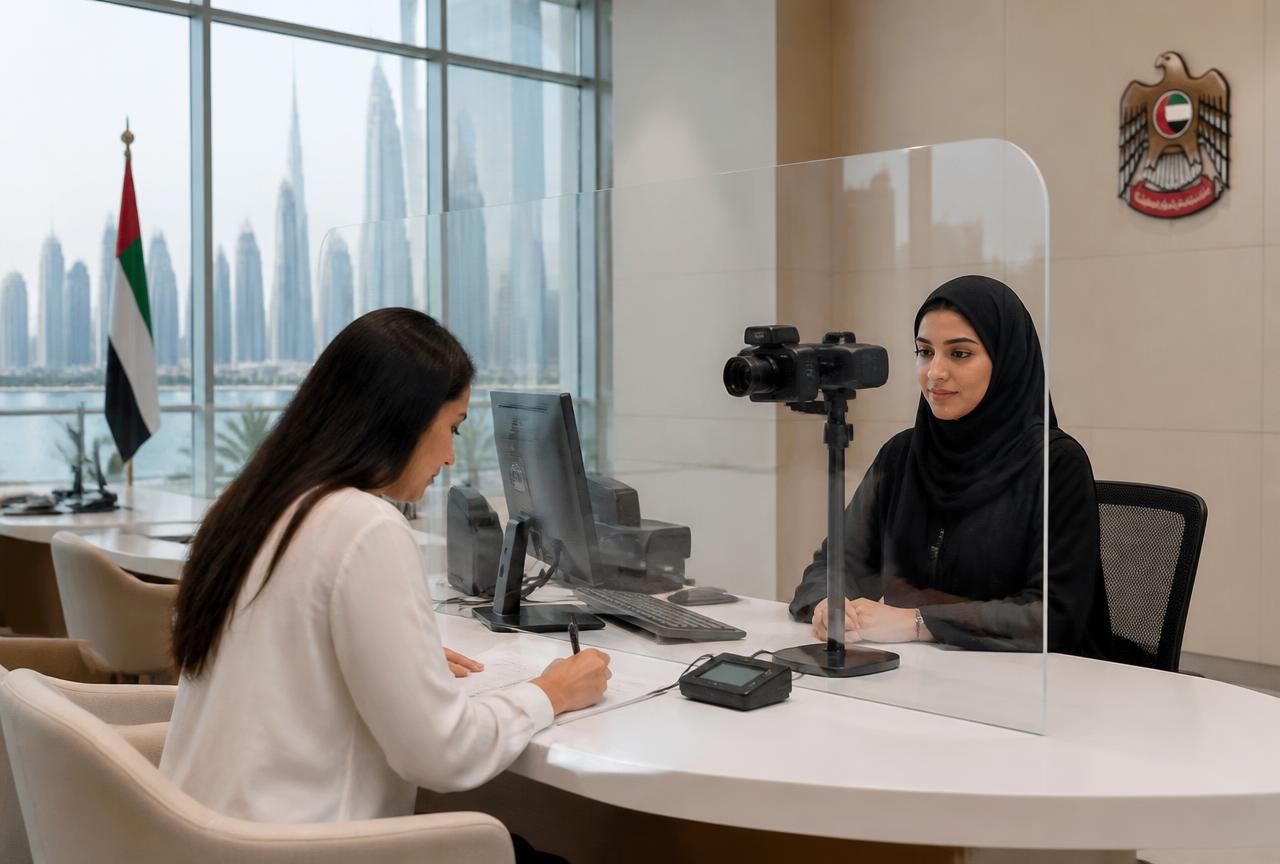
A well-prepared application runs on a predictable clock. Delays almost always trace to documents rather than to processing.
Planning the in-country window
The medical, biometrics and issuance steps cluster together and can normally be completed inside a single one-week trip if the entry permit is issued before you fly. Applicants who arrive before the permit is ready routinely spend two trips on a one-trip process.
| Stage | Typical duration | In-country required |
|---|---|---|
| Title deed issued and registered | Same day as transfer | No (POA possible) |
| DLD valuation certificate | 2 – 5 working days | No |
| Application submission and review | 3 – 10 working days | No |
| Entry permit issued | 2 – 7 working days | No |
| Medical fitness test | 1 – 3 working days | Yes |
| Biometrics and Emirates ID | 3 – 10 working days | Yes |
| Visa stamped / status changed | 2 – 5 working days | Yes |
Case study: choosing between the two thresholds
A software consultant working remotely for European clients bought a one-bedroom in Jumeirah Village Circle at AED 880,000 in 2024 and took the two-year investor visa. Total processing cost for himself and his spouse was roughly AED 19,000, and the visa did what he needed: bank account, Emirates ID, telecom contracts and a base.
By 2026, facing his second renewal and wanting to sponsor his mother, he reassessed. Adding a second apartment at AED 1.3 million lifted his registered ownership past AED 2 million and converted the position to a Golden Visa. Processing for three people came to roughly AED 34,000 — but it replaced four further two-year renewal cycles, removed the minimum-stay exposure and added parent sponsorship that the shorter visa never offered.
The financial verdict was straightforward once the horizon extended beyond four years: the Golden Visa costs more once and less overall. The second property also produced rental income, which the visa fees alone never do.
Common mistakes that cost applicants time and money
Property-linked residency is procedurally clean but unforgiving about documentation.
- **Relying on the purchase price rather than the valuation.** Only the Dubai Land Department valuation certificate counts.
- **Splitting ownership without checking share thresholds.** Each owner is assessed on their registered share.
- **Assuming off-plan qualifies everywhere.** It can support a Golden Visa from an approved developer; it generally does not support the two-year route.
- **Forgetting the bank NOC on mortgaged property.** Without it, a financed property will not be assessed.
- **Letting service charges fall into arrears.** Outstanding community charges can block the No Objection Certificate chain.
- **Confusing residency with tax residency.** They are separate tests with separate consequences, discussed in our Dubai property tax guide for foreign investors.
- **Selling the qualifying asset without a replacement.** Residency is conditional on continued ownership above the threshold.
Verify everything at source
Immigration thresholds and fee schedules are adjusted periodically and are administered by federal and emirate-level authorities in parallel. Before committing capital, verify current criteria directly through the Federal Authority for Identity, Citizenship, Customs and Port Security, the General Directorate of Residency and Foreigners Affairs — Dubai, and the Dubai Land Department for property valuation and title verification. The UAE Government portal publishes consolidated eligibility summaries for each visa category.
Title deeds, mortgage status and service-charge standing can all be verified independently through the Dubai REST application before you rely on them in an application.
Conclusion and next step
Property remains the cleanest private route into UAE residency because it is asset-backed, transparently verifiable and administered through a mature digital system. The decision is rarely whether to use it — it is which threshold to enter at.
Buyers with a horizon under three years, a single property and no extended-family sponsorship needs are well served by the AED 750,000 two-year visa. Buyers holding for a decade, sponsoring parents, or spending long stretches outside the UAE should treat AED 2 million as the real target, because the Golden Visa's absence of a minimum-stay rule is worth more than the fee difference on almost any realistic timeline.
If you are still choosing between a residency-driven purchase and a purely yield-driven one, compare this framework against the district-level returns in our highest rental yield areas analysis before you commit.
This article is informational and does not constitute legal or immigration advice. Thresholds, fees and eligibility conditions change; confirm the current position with ICP, GDRFA and a licensed advisor before applying.
Frequently asked questions
Can I get UAE residency by buying property in Dubai?
Yes. Property ownership above defined value thresholds qualifies the owner for a renewable residence visa. The two principal routes are a two-year investor visa from AED 750,000 of qualifying property and a ten-year Golden Visa from AED 2 million.
What is the minimum property investment for a Dubai visa?
AED 750,000 in a completed, freehold, individually owned property is the standard entry threshold for the two-year property investor visa. Below that value, the property does not create a residency entitlement.
How much property do I need for the UAE Golden Visa?
AED 2 million in property value. It may be one property or a combination of properties reaching that total, and since the 2022 reform it may include off-plan units from approved developers and mortgaged properties, subject to lender confirmation.
Does the property have to be paid in cash?
No longer. Mortgaged properties can qualify provided the required equity position is met and the financing bank issues a no-objection letter confirming the loan and the owner's paid portion. Requirements differ between the two-year and Golden Visa routes.
Can off-plan property qualify for a residency visa?
For the Golden Visa, off-plan purchases from approved developers can qualify where the required value has been paid. For the two-year investor visa, the property generally must be completed and handed over with a title deed issued.
Can I sponsor my family on a property visa?
Yes. Both routes allow sponsorship of a spouse and children, and the Golden Visa additionally permits sponsoring parents and domestic staff without the usual salary conditions. Each dependant carries its own fee set.
How long does the application take?
Typically two to six weeks from a complete submission. The property valuation certificate and the entry-permit stage move quickly; the medical fitness test, biometrics and Emirates ID issuance require the applicant to be in the UAE and account for most of the elapsed time.
Do I have to live in Dubai to keep the visa?
The Golden Visa has no minimum-stay requirement and does not lapse from time spent abroad, which is the single largest practical advantage for remote workers. Standard residence visas can lapse after a continuous absence of six months.
What happens to my visa if I sell the property?
The residency is conditional on continued qualifying ownership. Selling below the threshold, or selling entirely without a replacement qualifying asset, terminates the basis for renewal and can lead to cancellation before expiry.
What does the whole process cost?
Excluding the property, expect roughly AED 10,000 to AED 20,000 for a single Golden Visa applicant covering valuation certificate, application, medical, Emirates ID and issuance, with dependants adding several thousand dirhams each. The two-year route costs less but repeats more often.
Is a property visa the same as citizenship?
No. UAE residency grants the right to live, open bank accounts, sponsor family and access services. It is not a path to citizenship, and it does not by itself make you UAE tax resident.
Does holding a property visa make me tax resident in the UAE?
Not automatically. UAE tax residency has its own criteria including days present and centre of financial interests, and your home country applies its own tests. Holding a residence visa while continuing to live abroad usually leaves your existing tax residency unchanged.
Related in Visas
 VISAS
VISASDubai Golden Visa Through Property Investment: 2026 Costs, Rules and Process
 VISAS
VISASDubai Golden Visa via Property: Complete Requirements Guide 2026
 VISAS
VISAS