Highest Rental Yield Areas in Dubai 2026: Where the Numbers Actually Work

A community-by-community analysis of gross versus net rental yield across Dubai, showing how service charges, tenant profile and unit type decide which districts genuinely outperform once real costs are deducted.
Why headline yield numbers mislead
Rental yield is the most quoted and least examined metric in Dubai property. Portals advertise a community-level gross figure, buyers anchor to it, and the number that eventually lands in their account bears only partial resemblance to it.
The gap has three causes. First, gross yield ignores service charges, which in Dubai are substantial and vary enormously between buildings in the same district. Second, it assumes twelve months of occupancy at the advertised rent, which almost never happens in high-turnover stock. Third, it is calculated on asking prices and asking rents rather than on recorded transactions.
The corrective is not complicated. Calculate net yield on transacted prices, deduct the actual service charge for the specific building, assume realistic vacancy, and include management and maintenance. Applied consistently, that exercise reorders the community league table considerably, and occasionally reverses it.
The mechanics behind Dubai's yield spread
Dubai sustains higher yields than most global gateway cities for structural reasons rather than cyclical ones. There is no annual property tax, no personal income tax on individual rental income, and construction cost per square foot is comparatively low, which keeps entry prices moderate relative to income levels.
Within that environment, the spread between communities is driven by a single relationship: how far rent per square foot exceeds price per square foot. Mid-market communities built at density, with efficient layouts and moderate amenity load, produce the widest ratio. Prime waterfront and landmark districts command higher rents but higher prices still, compressing the percentage even as the absolute income rises.
Tenant profile then determines volatility. Communities serving young professionals and remote workers see faster turnover and shorter leases. Family communities anchored to schools see longer tenancies and lower churn but a narrower tenant pool.
Price per square foot versus rent per square foot
A useful screening habit is to divide achievable annual rent per square foot by price per square foot for every shortlisted unit. This single ratio strips out unit size, floor level and marketing narrative, and exposes buildings that are simply expensive relative to what they can earn.
Why service charges are the hidden variable
Service charges in Dubai are set per square foot per year and reflect amenity provision, tower height, chiller infrastructure and management efficiency. A heavily amenitized tower with pools, multiple gyms and extensive common areas can carry a charge several times that of a simple mid-rise, and that difference is deducted from income every single year regardless of occupancy.
Community comparison: gross yield versus net reality
The table below compares Dubai's principal investment communities on the factors that determine realized return rather than advertised return. Bands are indicative and intended for relative comparison; every building and unit must be verified individually against recorded transactions and its own service-charge schedule.
| Community | Entry price band | Gross yield band | Service charge load | Net yield outlook |
|---|---|---|---|---|
| Jumeirah Village Circle | Low | High | Low to moderate | Consistently strongest |
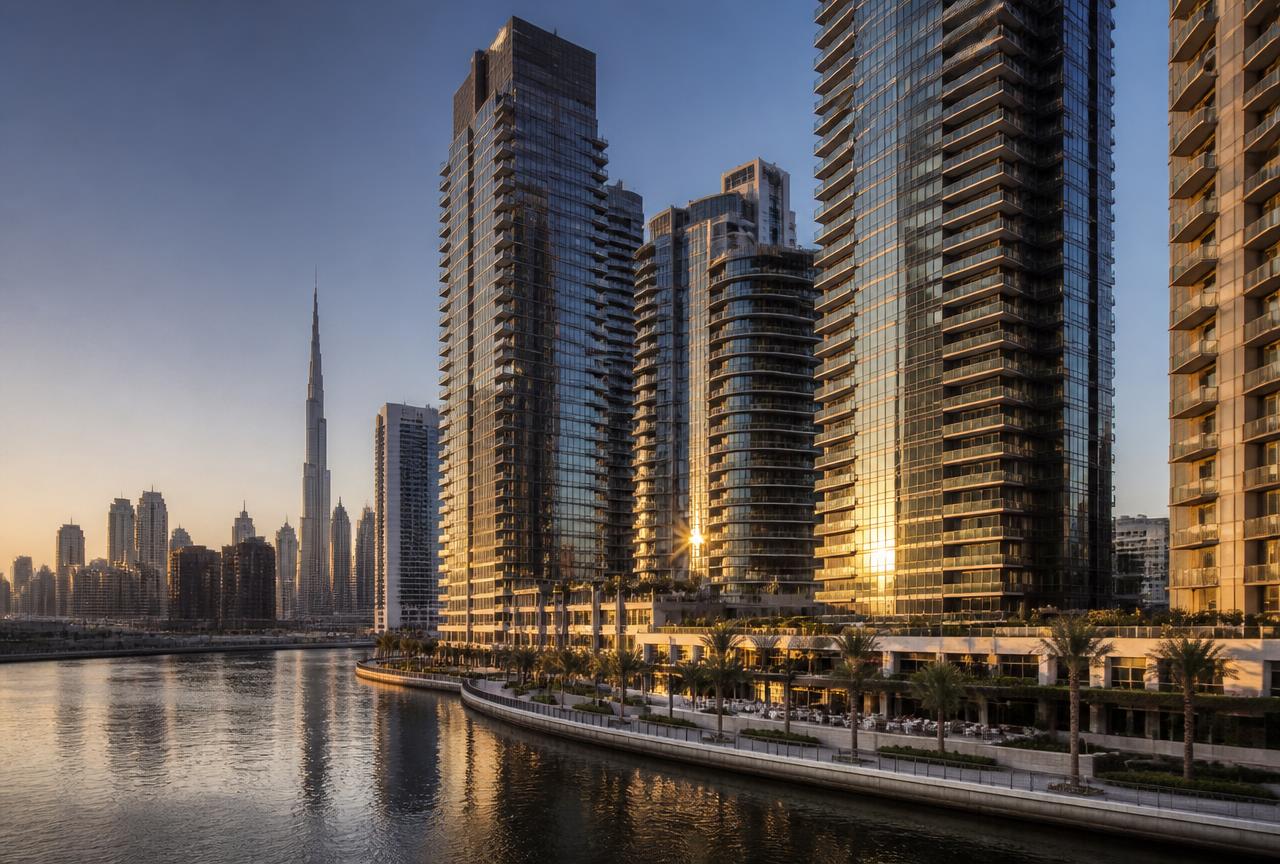
| Dubai Marina | High | Moderate | High | Solid, liquidity-rich |
| Business Bay | Moderate to high | Moderate to high | Moderate to high | Balanced |
| Downtown Dubai | Highest | Lower | Highest | Income modest, prestige premium |
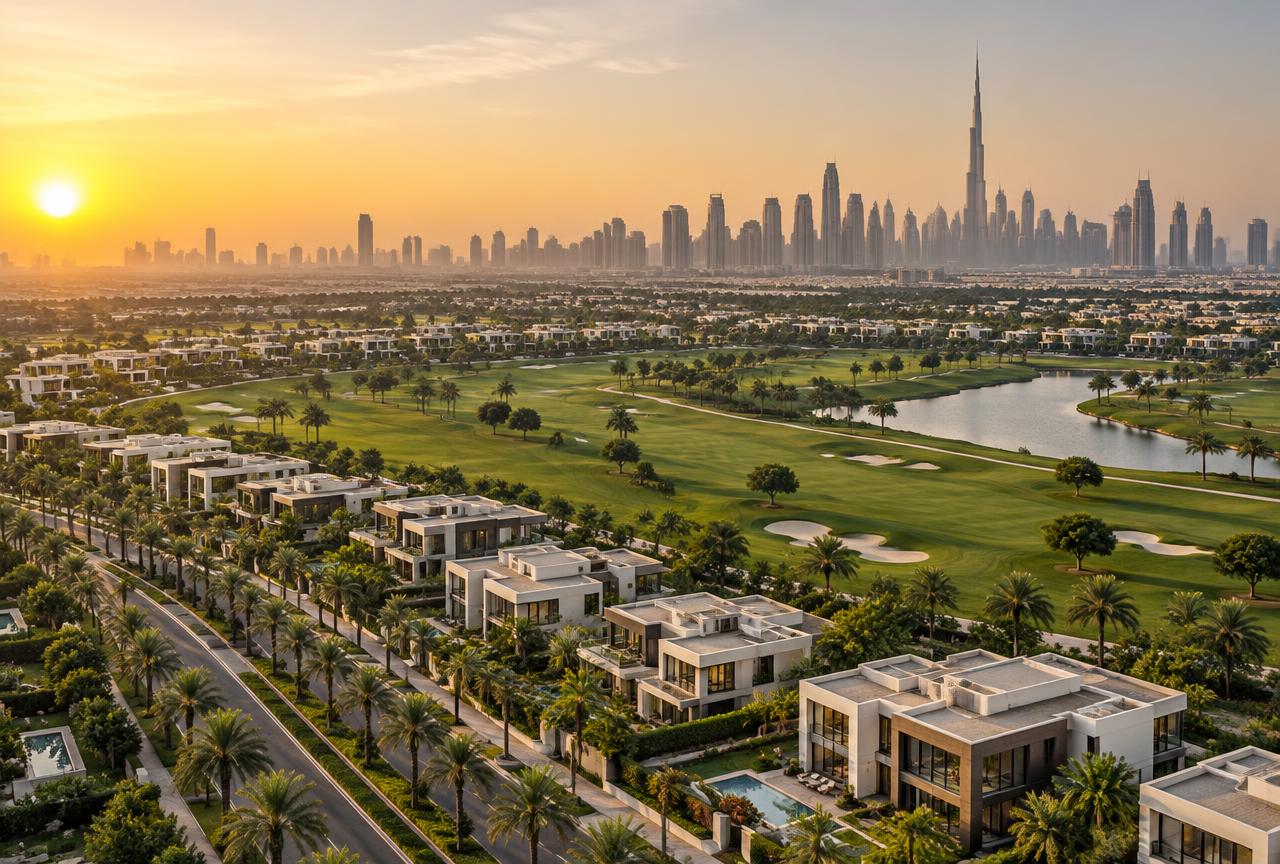
| Dubai Hills Estate | High | Moderate | Moderate | Stable, family tenant base |
| Dubai Creek Harbour | High | Moderate | Moderate to high | Supply-sensitive near term |
| Palm Jumeirah | Premium | Lower | High | Capital-led rather than yield-led |
| Jumeirah Lake Towers | Moderate | High | Moderate | Strong value for mid-market |
The mid-market case: why density wins on percentage
Communities like Jumeirah Village Circle and Jumeirah Lake Towers repeatedly top yield rankings for a reason that has nothing to do with glamour. Entry prices are low, achievable rents are supported by a deep tenant pool of professionals priced out of prime districts, and service charges in simpler buildings are contained.
The trade-offs are real and should be priced. Supply is abundant, which caps rent growth and dilutes capital appreciation. Turnover is high, which means letting costs and void periods recur. Building quality varies dramatically within a single street, so due diligence is building-specific rather than community-specific.
The investor profile suited to this segment is one seeking income now, comfortable with active management, and indifferent to prestige. Investors researching this segment specifically should read our JVC investment guide for community-level detail.
- Verify the exact service charge for the specific tower, not the community average.
- Check the building's chiller arrangement and who pays for cooling.
- Review the owners association's payment discipline and reserve fund status.
- Assess how many competing units in the same building are currently listed.
- Prefer efficient layouts with usable balconies over headline square footage.
The prime case: lower yield, different job
Downtown Dubai, Palm Jumeirah and the strongest Marina towers do not compete on percentage yield and should not be assessed as though they do. Their function in a portfolio is liquidity, currency-resilient capital value and tenant quality.
These districts are supply-constrained in a way mid-market communities are not. There is a finite quantity of genuine Burj Khalifa-view or beachfront-frontage stock, and that scarcity supports pricing through cycles. Rents are high in absolute terms, which produces strong cash income even at a modest percentage.
They are also the districts where furnished and short-stay demand is deepest, which gives owners an alternative operating model when annual-lease yields look thin. That path carries licensing and operational obligations covered in our holiday home licensing guide.
| Segment | Primary return driver | Main risk | Suits |
|---|---|---|---|
| Mid-market apartments | Rental income percentage | Supply and turnover | Income-focused investors |
| Established prime | Capital preservation and liquidity | Yield compression | Wealth-preservation buyers |
| Emerging waterfront | Capital appreciation | Handover supply waves | Longer-horizon investors |
| Family villa communities | Tenancy stability | Higher entry cost | Low-management holders |
Unit type: the decision that outranks the address
Within any given community, unit type moves yield more than most buyers expect. Rent per square foot declines as unit size increases, so studios and one-bedrooms carry the highest percentage yields while three-bedrooms and villas carry the lowest.
That relationship inverts on stability. Larger units attract households rather than individuals, and households move less frequently. A three-bedroom with a five-year tenant can outperform a studio with three tenancy changes in the same period once letting fees, voids and refurbishment are counted.
Layout efficiency is the underrated variable. Two units of identical square footage can achieve materially different rents depending on whether the space produces a genuine second bedroom, a usable kitchen and a balcony that a tenant will actually use.
- Studios: highest gross yield, highest churn, most exposed to new supply.
- One-bedrooms: the deepest tenant pool in Dubai and the best liquidity on resale.
- Two-bedrooms: balanced yield and stability, favoured by sharers and small families.
- Three-bedrooms and villas: lowest percentage yield, longest tenancies, lowest management load.

Modelling a purchase properly
The difference between a good and a bad Dubai investment decision is usually the quality of the model rather than the choice of community. A defensible model has five inputs and one stress test.
The inputs are total acquisition cost including the transfer fee and agency commission, achievable annual rent based on currently let comparable units rather than listings, the building's actual service charge, an operating allowance covering management, maintenance and insurance, and a vacancy allowance of at least one month per year.
The stress test is the part most spreadsheets omit: rerun the model at ten percent below current market rent with two months of vacancy. If the unit still produces an acceptable net return under that scenario, it has margin. If it only works at perfect occupancy and peak rent, it is a directional bet rather than an income asset.
| Line item | Treatment | Effect on return |
|---|---|---|
| Purchase price | Recorded comparable transactions | Denominator |
| DLD transfer fee and commission | Added to acquisition cost | Reduces yield |
| Annual rent | Currently let comparables | Numerator |
| Service charge | Actual per sq ft for that tower | Largest deduction |
| Vacancy allowance | One month minimum | Reduces income |
| Management and maintenance | Percentage of rent plus reserve | Reduces income |
Supply, regulation and what changes the ranking
Yield rankings are not permanent. Three forces reorder them: handover waves, regulation of rent increases, and infrastructure delivery.
Handover waves are the most predictable. A community absorbing several thousand units within a short window will see rents soften while the stock is let, then recover as absorption completes. Buyers can read this pipeline in advance and time entry accordingly.
Rent regulation shapes realized income differently. Increases on sitting tenancies are governed by the regulator's index framework, which links permitted increases to how far current rent sits below market. This protects tenants and creates a structural incentive for owners to keep rents close to market rather than allowing large gaps to build.
Infrastructure is the slowest and most powerful variable. Metro extensions, school openings, mall completions and road links permanently change a community's tenant pool. Areas that look expensive relative to current rents sometimes reprice quickly once the infrastructure that justified the pricing actually opens.
A practical selection framework
Rather than searching for a single best area, apply a filter sequence. It produces better decisions than community rankings because it forces building-level verification.
- Set the budget from confirmed financing, not aspiration.
- Shortlist three communities whose tenant profile you understand.
- Pull recorded transactions for the exact building and unit type.
- Obtain the actual service charge per square foot for each tower.
- Verify currently let rents, not asking rents, for comparable units.
- Model net yield with one month of vacancy and full operating costs.
- Stress the model at ten percent below market rent.
- Choose the unit with the best stressed net yield and acceptable resale liquidity.
Conclusion and next steps
Dubai's yield advantage over comparable global cities is structural, not promotional. No annual property tax, no personal income tax on individual rental income and moderate entry prices relative to rents combine to produce returns that most mature markets cannot match.
But the advantage is realized building by building. The community delivers the tenant pool; the specific tower's service charge, layout efficiency and competing supply deliver the return. Investors who verify at building level consistently outperform those who buy a community narrative.
The disciplined approach is unglamorous and effective: verify transacted prices, verify actual rents, verify the service charge, assume vacancy, stress the model, and only then decide. Everything else is commentary.
Official sources and further reading
Verify data directly at source before investing: the Dubai Land Department publishes transaction records, the rental index and the service-charge framework; the Dubai REST platform provides owner-facing access to title, service-charge and rental-index information; the Dubai Statistics Center publishes population and housing datasets that underpin demand analysis; and the UAE Government portal sets out tenancy and ownership regulation.
Continue with our Marina versus Downtown comparison, the JVC investment guide, the non-resident mortgage playbook for financed purchases, and the Glossary for definitions of service charge, Ejari, Mollak and net yield.
Frequently asked questions
What is a good rental yield in Dubai?
Gross yields across Dubai's mainstream apartment stock commonly sit in a broad range between roughly 5% and 8%, with mid-market communities at the upper end and prime waterfront districts at the lower end. What matters is the net figure after service charges, vacancy and management, which is typically one to two percentage points lower.
Which Dubai areas have the highest rental yields?
Mid-market, high-density apartment communities consistently lead on gross yield because entry prices are low relative to achievable rents. Established prime districts trade yield for liquidity, tenant quality and capital appreciation.
What is the difference between gross and net yield?
Gross yield divides annual rent by purchase price. Net yield deducts service charges, vacancy, management fees, maintenance, insurance and any financing cost before dividing. Net yield is the only figure that reflects money actually received.
How much are service charges in Dubai?
Service charges are levied per square foot per year and vary widely by building, driven by amenity load, tower height and management quality. They are the largest single deduction from gross yield and are published through the regulator's service-charge framework.
Do studios yield more than larger apartments?
Usually yes on a percentage basis, because rent per square foot falls as unit size rises. Studios also carry higher tenant turnover and are more exposed to new supply, so the higher headline yield compensates for higher operational intensity.
Is furnished letting worth it in Dubai?
Furnishing lifts achievable rent, particularly for remote workers and short-stay corporate tenants, but it introduces depreciation and replacement cost. It generally pays where the tenant profile in that community actively searches for furnished stock.
How does short-term letting compare with annual leases?
Short-term letting can produce higher gross revenue in demand-dense locations but carries licensing, operational cost and seasonality. Annual leases produce lower gross income with far lower variance and administration.
Does the Dubai rent index limit what I can charge?
Rent increases on existing tenancies are governed by the regulator's rental index framework, which ties permitted increases to how far the current rent sits below market. New tenancies are set at market, which is why turnover and re-letting strategy matter to real returns.
Are off-plan units a good yield play?
Off-plan is primarily a capital-appreciation and payment-plan strategy rather than a yield strategy, since no income accrues during construction. Yield only begins at handover, and handover waves can temporarily depress rents in the same community.
How much should I budget for vacancy?
A prudent model assumes at least one month of vacancy per year in high-turnover mid-market stock and slightly less in established family communities. Assuming full occupancy is the most common error in Dubai investment spreadsheets.
Do high-yield areas appreciate more slowly?
Frequently. Communities with abundant land and an active supply pipeline can sustain strong yields while capital growth is diluted by new stock. Supply-constrained districts often show the opposite pattern.
What single factor most damages net yield?
Service charges. Two apartments generating identical rent in different buildings can deliver materially different net returns purely because of the annual per-square-foot charge attached to the tower.
Related in Areas
 AREAS
AREASDubai Hills Estate 2026: Villa Prices, Apartment Yields and What Families Actually Pay to Live There
 AREAS
AREASDubai Marina Apartments for Sale 2026: Prices, Yields and the Towers That Actually Perform
 AREAS
AREAS