Dubai Waterfront Luxury Property 2026: Palm Jumeirah, Emaar Beachfront, Dubai Creek Harbour and Jumeirah Bay Compared
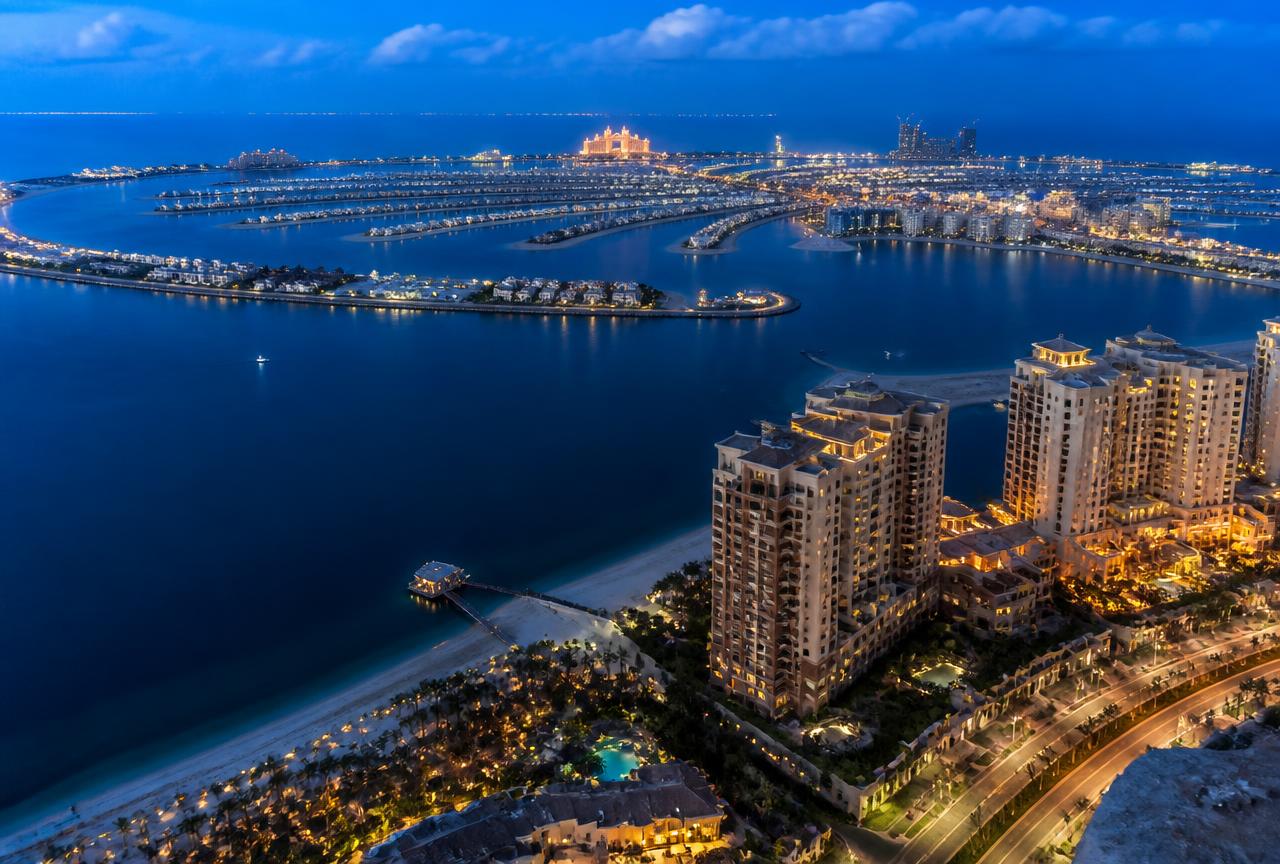
Where the prime money is going and what it is actually buying. Price per square foot, service charges, rental performance, branded-residence premiums and exit liquidity across Dubai's four defining waterfront addresses, with an honest view of which numbers hold up.
Dubai's prime waterfront is now four separate markets
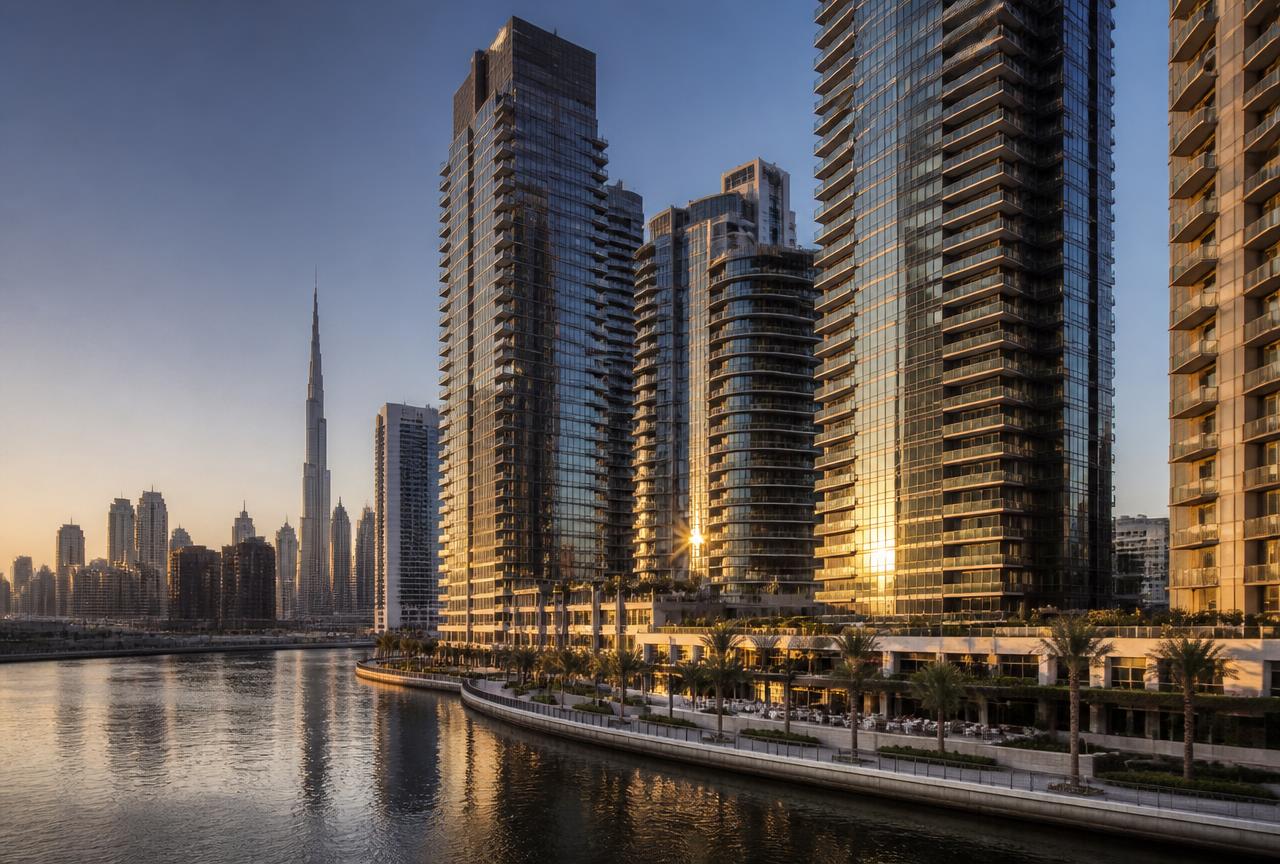
For most of the last decade, prime Dubai waterfront meant Palm Jumeirah, and everything else was compared to it. That is no longer accurate. Emaar Beachfront delivered a dense, contemporary alternative with private beach access minutes from Dubai Marina. Dubai Creek Harbour built a waterfront that is not a beach at all. Jumeirah Bay Island turned scarcity itself into a product.
These addresses look similar in a brochure and behave completely differently as investments. One is a mature market with two decades of comparable transactions. One is still absorbing new supply. One is a growth-stage master plan whose value is partly a bet on future delivery. One is a market so small that a handful of sales set the price for everyone.
Investors who treat them as interchangeable make the same mistake repeatedly: they buy the view and inherit somebody else's liquidity profile.
Palm Jumeirah: the benchmark
Palm Jumeirah is the address that made Dubai legible to international luxury buyers. Delivered by Nakheel and populated over roughly two decades, it now contains everything from beachfront mansions on the fronds to signature apartments on the crescent, older mid-2000s apartment stock on the trunk, and a hotel corridor that supports one of the strongest short-let markets in the emirate.
Its investment case is built on three things. Scarcity is genuine: no further fronds are being created, and beachfront plots are finite. Recognition is global, which matters enormously for exit because the buyer pool includes people who have never visited Dubai. And the short-let economy is mature, with established operators, consistent tourist demand and nightly rates that support strong revenue on well-positioned units.
Where the value differences sit
Within Palm Jumeirah, pricing is driven by frond position, sea orientation, beach access and building age far more than by internal finish. A renovated apartment in a 2007 trunk building and a new crescent unit are not competing for the same buyer, and averaging them produces a meaningless number.
Older trunk stock carries renovation exposure and dated layouts but often the most defensible price per square foot. Crescent and signature developments command the premium and attract the international ultra-prime buyer. Fronds are villa territory, where the market is thinnest and price discovery is genuinely negotiated rather than indexed.
The cost side nobody advertises
Service charges on Palm Jumeirah are among the highest in Dubai, driven by beach maintenance, extensive amenity provision, security and district cooling. On a large apartment, the annual charge can exceed the entire annual rent of a mid-market studio elsewhere in the city. Verify the exact figure for the exact building through Mollak, and underwrite net yield rather than gross.
Emaar Beachfront: the contemporary alternative
Emaar Beachfront occupies a man-made peninsula between Dubai Marina and Palm Jumeirah, delivering a gated cluster of contemporary towers with private beach, direct sea views and immediate proximity to Marina's infrastructure. Where Palm accumulated over twenty years, Emaar Beachfront was designed as one scheme, and it shows in the consistency of the product.
For investors, the appeal is a lower entry point into genuine beachfront than Palm's comparable stock, newer building services, and a tenant profile drawn from the same executive and remote-professional pool that sustains Marina and JLT. Rental demand benefits from location rather than novelty, which is the more durable of the two.
The counterweight is supply. A master plan delivering multiple towers in sequence puts competing units on the market simultaneously, both for sale and for lease. Investors buying a unit that is functionally identical to four hundred others in the same cluster should expect price discipline on exit and should choose floor, orientation and layout with that competition in mind.
| Address | Water type | Market stage | Primary buyer | Liquidity |
|---|---|---|---|---|
| Palm Jumeirah | Open sea, private beach | Mature | Global ultra-prime and short-let | Deep for apartments, thin for mansions |
| Emaar Beachfront | Open sea, private beach | Delivering | End-user and yield investor | High, competitive supply |
| Dubai Creek Harbour | Creek and sanctuary | Growth | Off-plan and long-hold | Improving with delivery |
| Jumeirah Bay Island | Open sea, exclusive | Ultra-prime, complete | Trophy and family office | Very thin by design |
Dubai Creek Harbour: waterfront without the beach
Dubai Creek Harbour is an Emaar master plan on the historic creek, adjacent to the Ras Al Khor Wildlife Sanctuary and positioned around a future landmark tower and central district. Its water is the creek, not the Gulf, and its views are skyline and wetland rather than open sea and sand.
That difference is the whole investment thesis. Creek Harbour prices below true beachfront, delivers apartments with dramatic Downtown skyline views, and offers a growth-stage master plan where infrastructure and amenity density are still being built out. Buyers are underwriting future placemaking as much as current product.
The risk is symmetrical. Growth-stage master plans deliver in waves, which means sustained new supply competing with resale stock, and amenity promises that arrive on developer timelines rather than investor ones. Buyers should weight completed phases with functioning retail and transport more heavily than renders, and should assume a longer hold before the community premium fully crystallizes.
- Prioritize completed or near-complete phases with operating retail and access infrastructure.
- Confirm the view corridor cannot be built out by a later phase of the same master plan.
- Model an extended absorption period before resale, not a two-year flip.
- Compare payment-plan pricing against ready-stock resale in the same district before assuming off-plan is cheaper.
Jumeirah Bay Island: scarcity as the entire product
Jumeirah Bay Island is a small seahorse-shaped island off Jumeirah Beach Road, holding a limited number of plots and villas alongside a landmark hotel and a small collection of ultra-prime residences. It represents the top of the Dubai market in price per square foot and the bottom in transaction volume.
The economics here are unlike anything else in the emirate. Rental yield is functionally irrelevant to most owners. Value is set by scarcity, by proximity to central Jumeirah rather than the outer coast, and by the willingness of a very small pool of global buyers to compete for a fixed number of plots. When that pool is active, price discovery is aggressive. When it pauses, there is no volume beneath it.
For an investor rather than an occupier, the honest assessment is that Jumeirah Bay is a wealth-preservation and lifestyle asset, not a yield instrument. It rewards buyers with long horizons and no liquidity requirement, and punishes anyone who needs to sell on a schedule.
Short-let versus long-let on the waterfront
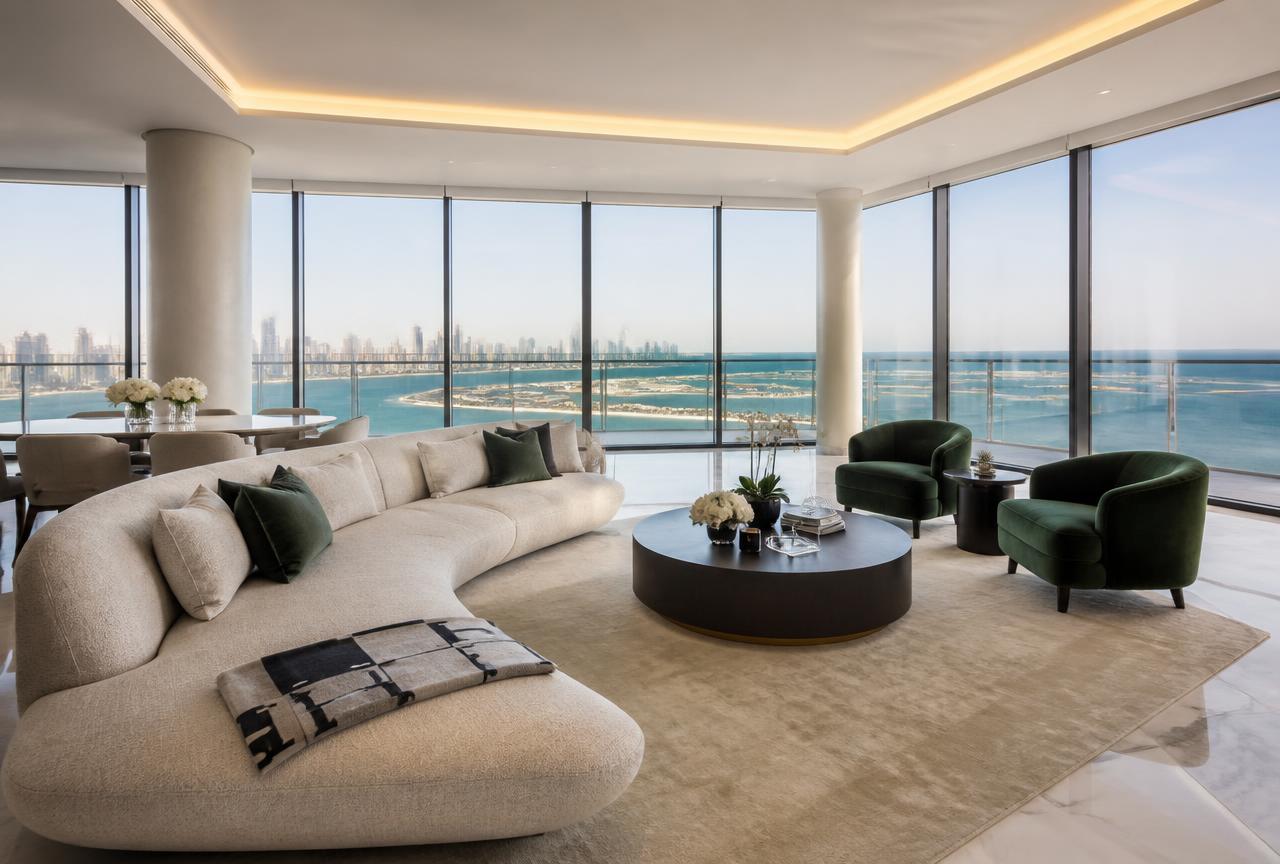
Waterfront Dubai is one of the few segments where short-term letting can meaningfully outperform annual leasing, because tourist demand is concentrated exactly where the sea is. Palm Jumeirah in particular sustains rates that annual tenants would never pay on a monthly basis.
The qualifications matter. Short-let operation requires a Department of Economy and Tourism holiday-home permit, and the building's owners association must allow it. Several prime towers restrict short-let activity outright, and buying on the assumption you can operate nightly before confirming that is a costly error. Operating costs are also materially higher: management fees, furnishing, utilities, cleaning, platform commission and higher wear.
Investors weighing the two models should read our Dubai holiday home licence guide for the permit mechanics, and compare the net figures against the community benchmarks in our highest rental yield areas analysis before committing to a strategy.
| Factor | Annual lease | Licensed short-let |
|---|---|---|
| Gross revenue potential | Lower, predictable | Higher, seasonal |
| Operating cost load | Minimal | Substantial |
| Regulatory requirement | Ejari registration | DET permit plus OA consent |
| Void risk | One tenant, annual cycle | Continuous, demand-driven |
| Owner usage | None during term | Flexible between bookings |
| Net outcome | Stable | Higher ceiling, higher variance |
How to choose between the four
The decision is not which address is best. It is which constraint you are least able to tolerate.
If exit liquidity is the priority, buy apartment stock in a mature, deep market where dozens of comparable units trade annually. If income is the priority, accept newer, denser beachfront where entry pricing supports a real yield and verify service charges obsessively. If capital preservation and scarcity are the priority, pay the ultra-prime premium and accept that selling will take time. If you are buying growth, buy a growth-stage master plan and commit to the holding period that thesis requires.
What does not work is buying an ultra-prime trophy asset with a yield expectation attached, or buying growth-stage off-plan with a two-year exit assumption. Both are common and both fail for reasons that were visible before purchase.
- Verify freehold status, title and project registration on Dubai REST before offering.
- Pull actual Mollak service-charge history for the specific building, not the community average.
- Confirm short-let permission with the owners association if the strategy depends on it.
- Compare three units within the same tower before comparing across communities.
- Underwrite net yield after service charges, management and voids.
- Match the holding period to the liquidity depth of the price band you are buying in.
Conclusion: buy the market structure, not the render
Dubai's waterfront has matured into a set of genuinely distinct markets with distinct risk profiles, and the difference between a good waterfront purchase and a disappointing one is almost never the quality of the building. It is whether the investor correctly identified what they were buying: scarcity, income, growth or liquidity. Very few assets deliver more than two of those simultaneously, and none delivers all four.
Prime waterfront will continue to attract international capital because the underlying constraint is real and Dubai keeps adding reasons for wealthy people to live here rather than merely visit. That tailwind rewards patient, well-underwritten purchases. It does not rescue a poorly chosen unit in an oversupplied tower.
Confirm ownership categories, project status and transaction records with the Dubai Land Department and check developer and broker registration through Dubai REST. Buyers considering residency alongside a prime purchase should review our Golden Visa property guide. This article is informational and does not constitute investment advice.
Frequently asked questions
Is Palm Jumeirah still a good investment in 2026?
Palm Jumeirah remains Dubai's most internationally recognized address and its deepest ultra-prime market, which supports liquidity at high price points. Gross yields are lower than mid-market Dubai because capital values are high, so the case rests on capital preservation, scarcity of beachfront land and short-let performance rather than income multiples.
What is the difference between Palm Jumeirah and Emaar Beachfront?
Palm Jumeirah is a mature, mixed community with villas, mansions, branded hotels and older apartment stock on a man-made island. Emaar Beachfront is a newer, denser master-planned peninsula of contemporary towers with private beach access, developed as a single coherent scheme rather than assembled over two decades.
Which Dubai waterfront area has the highest rental yield?
Among prime waterfront addresses, newer mid-floor apartments in Emaar Beachfront and Dubai Creek Harbour generally produce stronger gross yields than Palm Jumeirah villas or Jumeirah Bay, because entry prices are lower relative to achievable rent. Ultra-prime assets trade yield for scarcity.
Are branded residences worth the premium in Dubai?
Branded residences typically transact at a meaningful premium over comparable unbranded stock in the same location. The premium is most defensible where the operator brings genuine service infrastructure and rental distribution, and least defensible where branding is a badge applied to an otherwise ordinary building.
What are service charges like on Dubai waterfront property?
Prime waterfront service charges are among the highest in Dubai on a per-square-foot basis, reflecting beach maintenance, extensive amenities, concierge staffing and district cooling. They materially affect net yield and should be verified through the Mollak system for the specific building before purchase.
Can foreigners buy on Palm Jumeirah and Jumeirah Bay?
Yes. Both are designated freehold areas where non-UAE nationals can own outright in their own name, with title registered at the Dubai Land Department.
Do waterfront properties qualify for the Golden Visa?
Any property valued at AED 2 million or above can support a Golden Visa application, a threshold that virtually all prime waterfront stock exceeds comfortably.
Is short-term rental allowed in waterfront buildings?
It depends on the building. Holiday-home operation requires a Department of Economy and Tourism permit and the building owners association must permit it. Several prime towers restrict or prohibit short-let activity, so this must be confirmed before purchase if the strategy depends on it.
How liquid is Dubai ultra-prime property?
Liquidity thins as price rises. Apartments below roughly AED 10 million in established waterfront towers trade readily; mansions and signature penthouses have a buyer pool measured in dozens globally and can take many months to place at the right price.
Is Dubai Creek Harbour waterfront in the same sense as Palm Jumeirah?
No. Creek Harbour fronts the Dubai Creek and its wildlife sanctuary rather than open sea, offering skyline and water views rather than beach access. It is a growth-stage master plan, which makes it a different risk and return profile from a completed beachfront island.
What is the typical price per square foot on Dubai's prime waterfront?
Prime waterfront apartment pricing spans a wide band depending on floor, view and building age, with signature branded stock and ultra-prime islands transacting at multiples of the Dubai citywide average. Always compare like-for-like within the same tower rather than across communities.
Should I buy off-plan or ready on the waterfront?
Ready stock gives immediate income, verifiable service charges and a known finished product. Off-plan gives payment-plan leverage and first-hand pricing but carries handover, delivery and market-timing risk. On the waterfront specifically, view corridors that are guaranteed today can be built out later, which favors verifying the outlook on ready stock.
Related in Areas
 AREAS
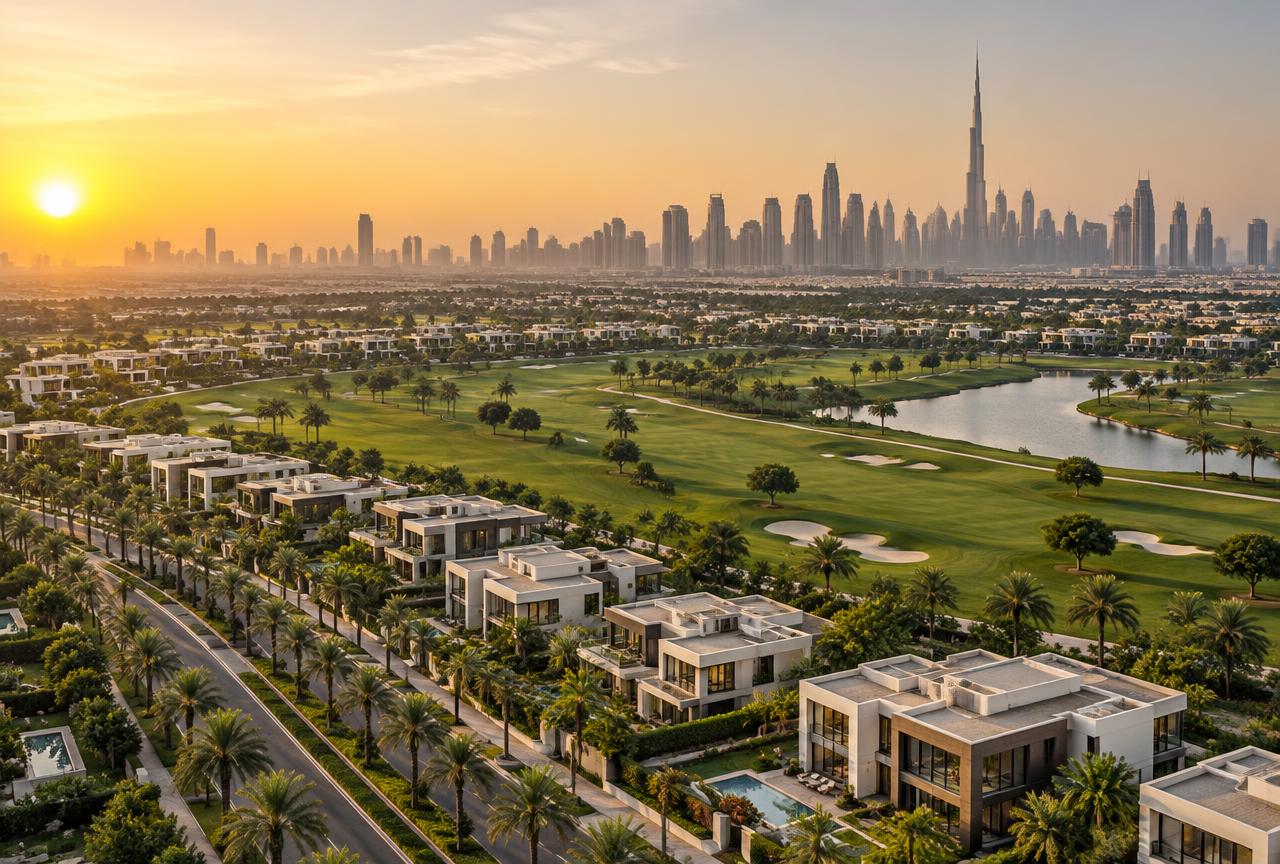
AREASDubai Hills Estate 2026: Villa Prices, Apartment Yields and What Families Actually Pay to Live There
 AREAS
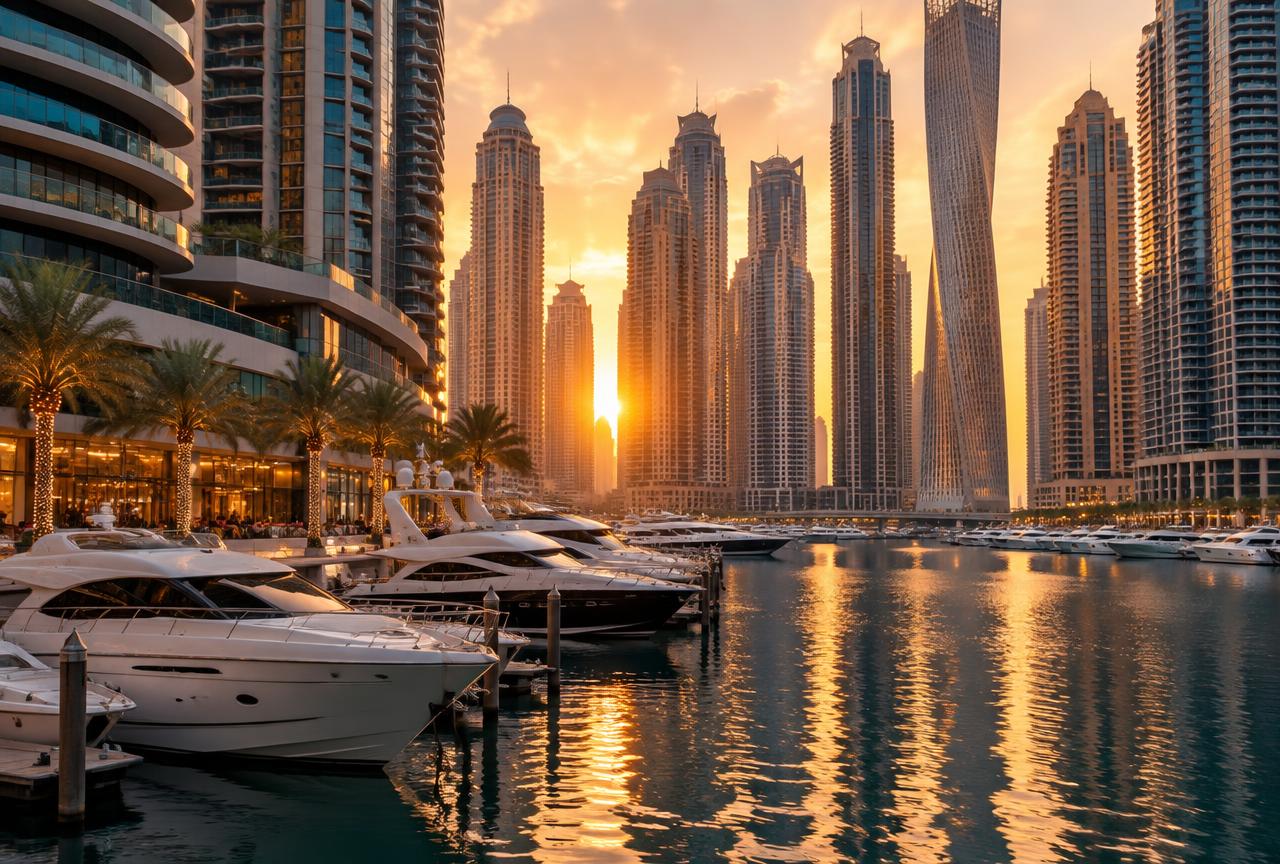
AREASDubai Marina Apartments for Sale 2026: Prices, Yields and the Towers That Actually Perform
 AREAS
AREAS